admin
 SUBEB, British Council Partner to Train 140 Primary School Teachers, Headteachers across 10 LGAs
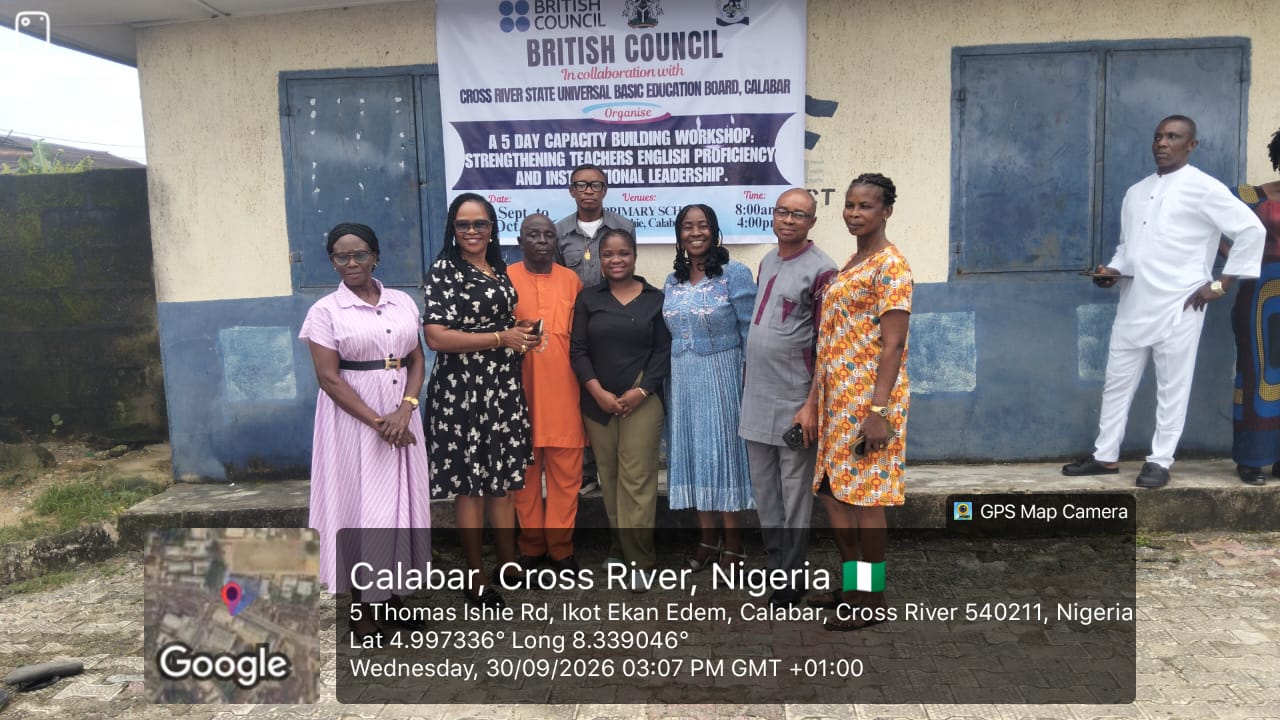
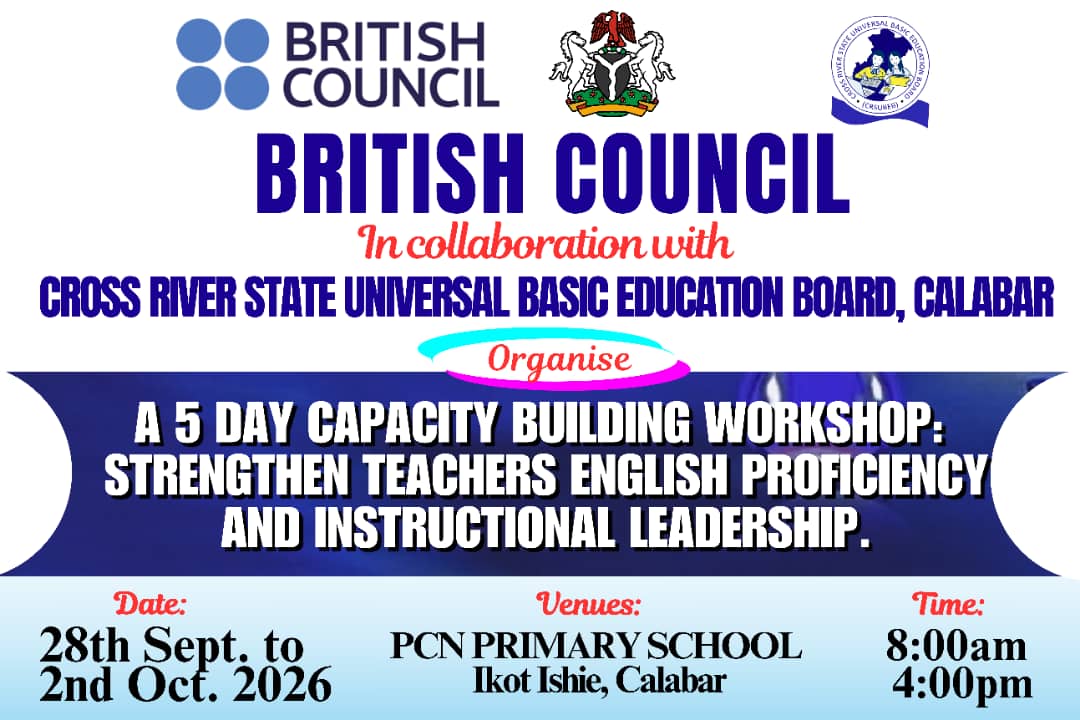
CALABAR — In a sustained drive to elevate instructional quality in basic education, the Cross River State Universal Basic Education Board (CR-SUBEB), in partnership with the British Council of Nigeria, has concluded a four-day intensive capacity-building programme for primary school educators.
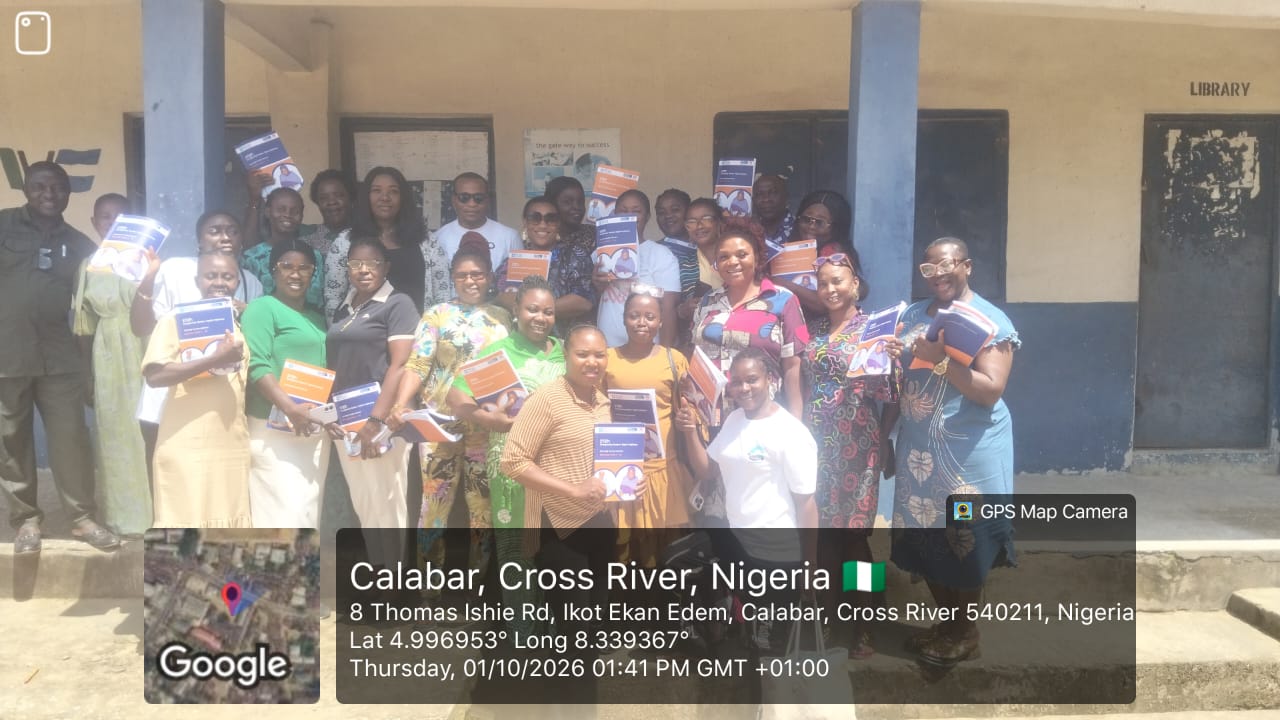
The workshop, which ran from September 28 to October 1, 2026, at PCN Primary School, Ishie Town, brought together 140 participants—including classroom teachers and headteachers—drawn from 10 Local Government Areas: Obubra, Yakurr, Abi, Biase, Akamkpa, Odukpani, Calabar Municipal, Calabar South, Akpabuyo, and Bakassi.
The dual-track initiative focused on two core frameworks: the Strengthening Teachers’ English Proficiency (STEP) programme for classroom teachers and specialized Instructional Leadership (IL) modules for headteachers.
Deepening Language Proficiency and School Leadership
Building on previous collaborative interventions—including the training of 300 primary teachers and a 2025 joint session with the Teachers Registration Council of Nigeria (TRCN)—this latest cohort targeted practical classroom execution and administrative oversight.
The curriculum covered 20 modular units spanning listening comprehension, reading texts, grammar, pronunciation, and vocabulary enrichment, alongside administrative leadership strategies designed to strengthen institutional management. Participants were grouped across four cohorts (Classes A, B, C, and a dedicated Headteachers’ stream), utilizing participatory group work and peer pairing.
Key competencies acquired during the sessions include:
-
Mastery of the ESSPIN Model for structured lesson planning and delivery.
-
Transition techniques to guide learners effectively from their mother tongue (home language) into English.
-
Activity-based, learner-centred pedagogical models designed for active pair and group engagement.
-
Independent study and self-assessment routines to sustain professional growth.
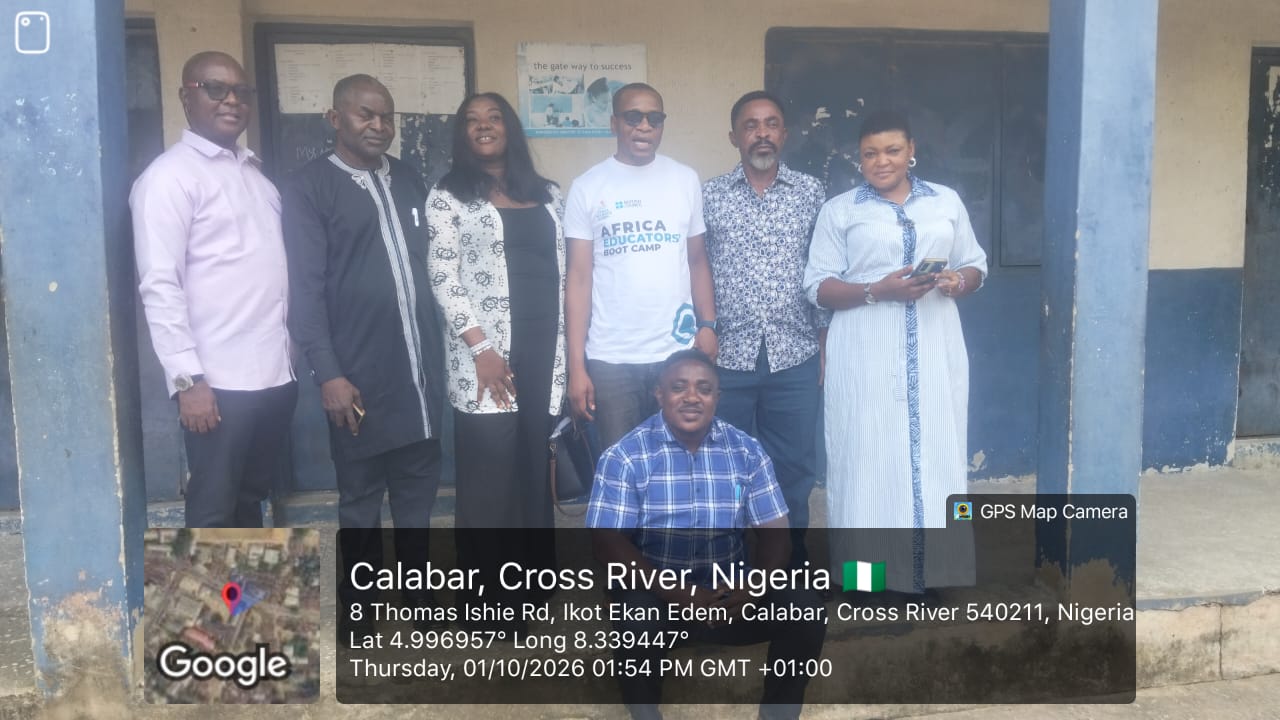
The sessions were coordinated under Programme Manager Dr. Bliss and facilitated by a five-member resource team: Dr. Agba Linus Agba, Dr. Nsa Asuquo Okon, Dr. Bassey Ene Effiom, Mrs. Tonbara Thank God-Ibulubo, and Mrs. Olanupe.
High Impact and Ongoing Mentorship
According to the official report by the Desk Officer for Training, Constant Arobor Ellah, the programme achieved an overall assessment rating of 4 out of 5 (“Very Good”), exceeding participant expectations in delivery, engagement, and materials.
To preserve the gains of the exercise, training facilitators have established dedicated digital mentorship channels on WhatsApp to support participants with real-time feedback and peer-learning during classroom implementation.
Looking ahead, the report recommends:
-
Formal appreciation and deepened institutional ties with the British Council to expand capacity programmes to the remaining eight local government areas.
-
Rigorous post-training monitoring to translate instructional gains directly into higher student performance across the state’s HOPE-Edu indicators.
-
Upgraded logistical arrangements, including early device compliance and enhanced audio-visual aids for future exercises.